What is lithography?
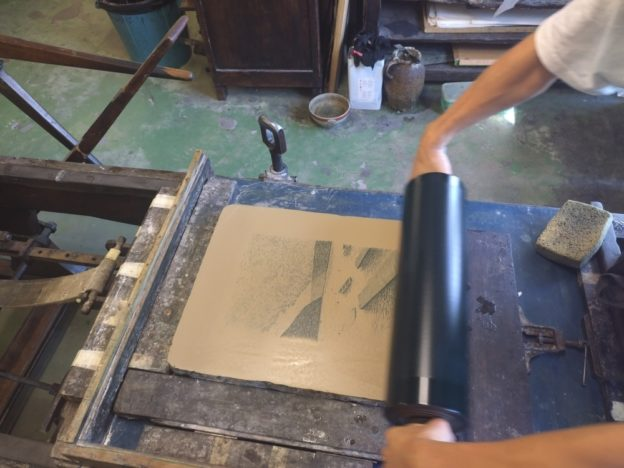
Invented in Germany in 1796, this technique for creating and printing on limestone is based on the simple repulsion between water and oil. It therefore relies solely on this chemical principle, without the need for raised or recessed engraving… I invite you to discover it at the Musée-Atelier de l’Imprimerie in Nantes!
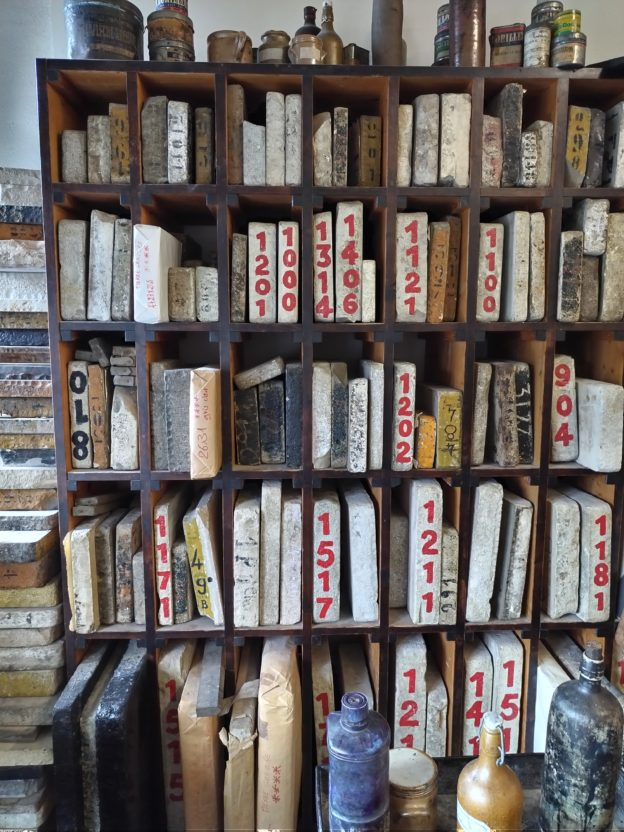
Photo transfer: a quick win…
For this first attempt, I started by using one of my own photos, which I’d printed in black and white on a laser printer (using unfused toner, so the powder wasn’t set). In short, here are the steps:
Coat the stone with solvent (screen wash for screen printing) using a cloth to strip away the toner. Then place the photograph face down on the stone, add a piece of cardboard to hold it in place, and use the press to transfer the image from the paper onto the limestone.
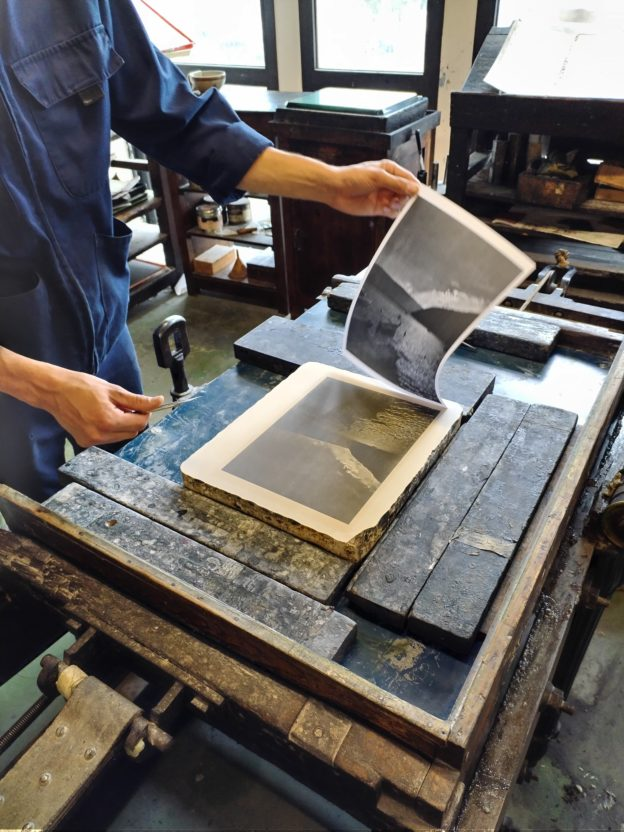
Allow to dry for 30 minutes so that the image is fully absorbed into the stone.
Powder the stone with talcum powder to protect the image. Then, coat it with rosin to fix the drawing and a mixture of synthetic gum and a few drops of pure vitriol. Blot with pure water, dry, and re-talc.
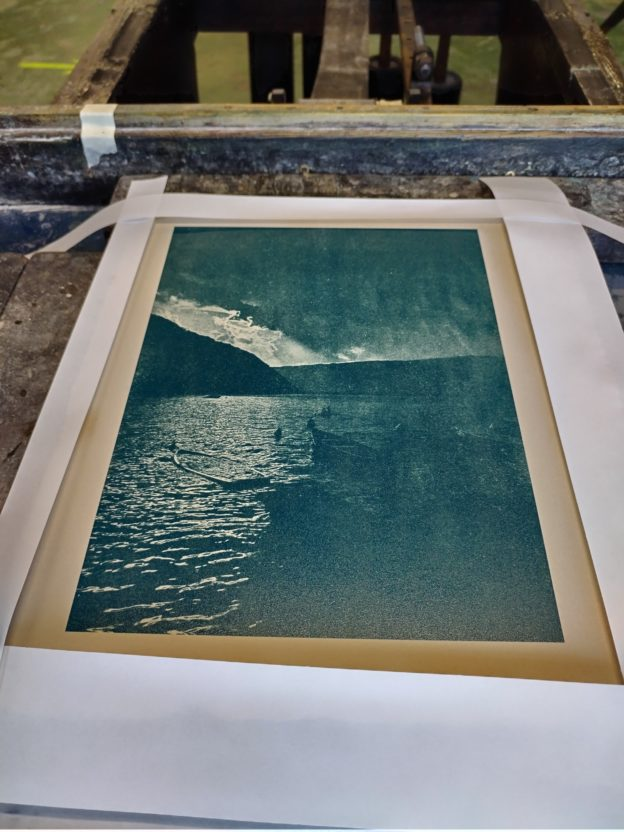
Coat again with acacia gum diluted in water, then with bitumen of Judea (powder diluted in turpentine) to solidify the black areas. Blot with pure water, dry, and then re-moisten. Prepare the desired color by mixing the base colors to obtain the desired shade—here, the unique color of Lake Annecy—and spread this oil-based ink onto a glass plate with a rubber roller. Moisten the stone again, apply ink, moisten, and then apply another coat of ink. Protect the sharp edges of the stone with strips of paper if necessary to avoid inking the edges and to obtain a clear print.
The traditional method, the best!
This time, we’re taking it up a notch in terms of difficulty because it involves creating directly on the limestone using an oil-based medium, but without the possibility of erasing… So I had fun redrawing the Bay of Talloires with lithographic pencils, of varying hardness (like regular pencils, which range from H “hard” to B “bold” or E “extreme,” with HB being the middle ground).
It’s also possible to paint with a black oil-based ink, which can then be diluted to create washes of varying lightness, like watercolor.
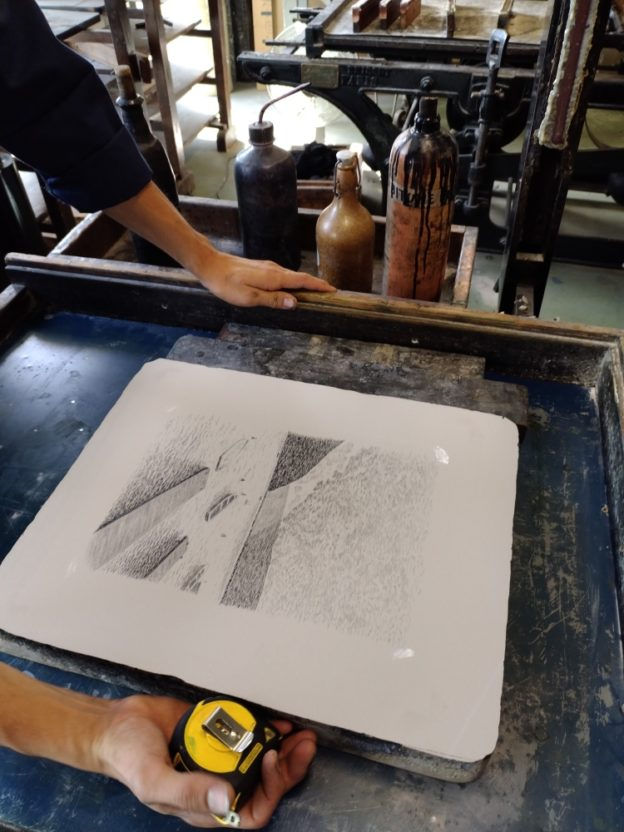
Then come all the chemical operations of preparing the stone as for photographic transfer, with an even more surprising moment, since the drawing is momentarily erased by the sponge soaked in acid… You have to totally trust the lithographic experts, thanks again Noé and Philippe!
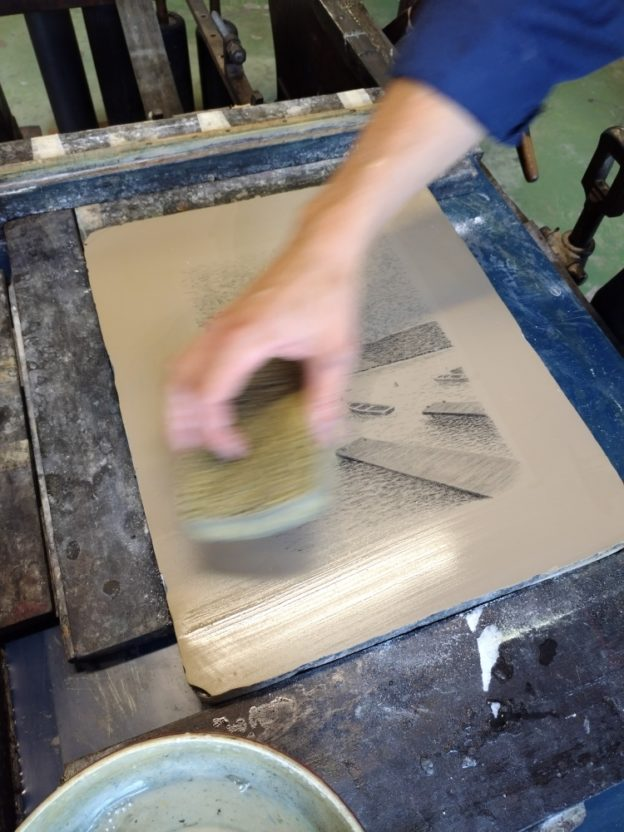
Once the stone is inked, the design reappears, as if by magic…
As you can see, this technique clearly offers greater creative freedom, and it’s easy to understand why it truly revolutionized the art of engraving in the 19th century, and continues to do so today!