During the ‘Plants and People’ exhibition at the Nantes Museum of Art, I had the chance to explore new techniques in a ‘three-in-one’ workshop.
Drawing at the Nantes Museum of Fine Arts
In the morning, we began by drawing directly in front of the artworks.
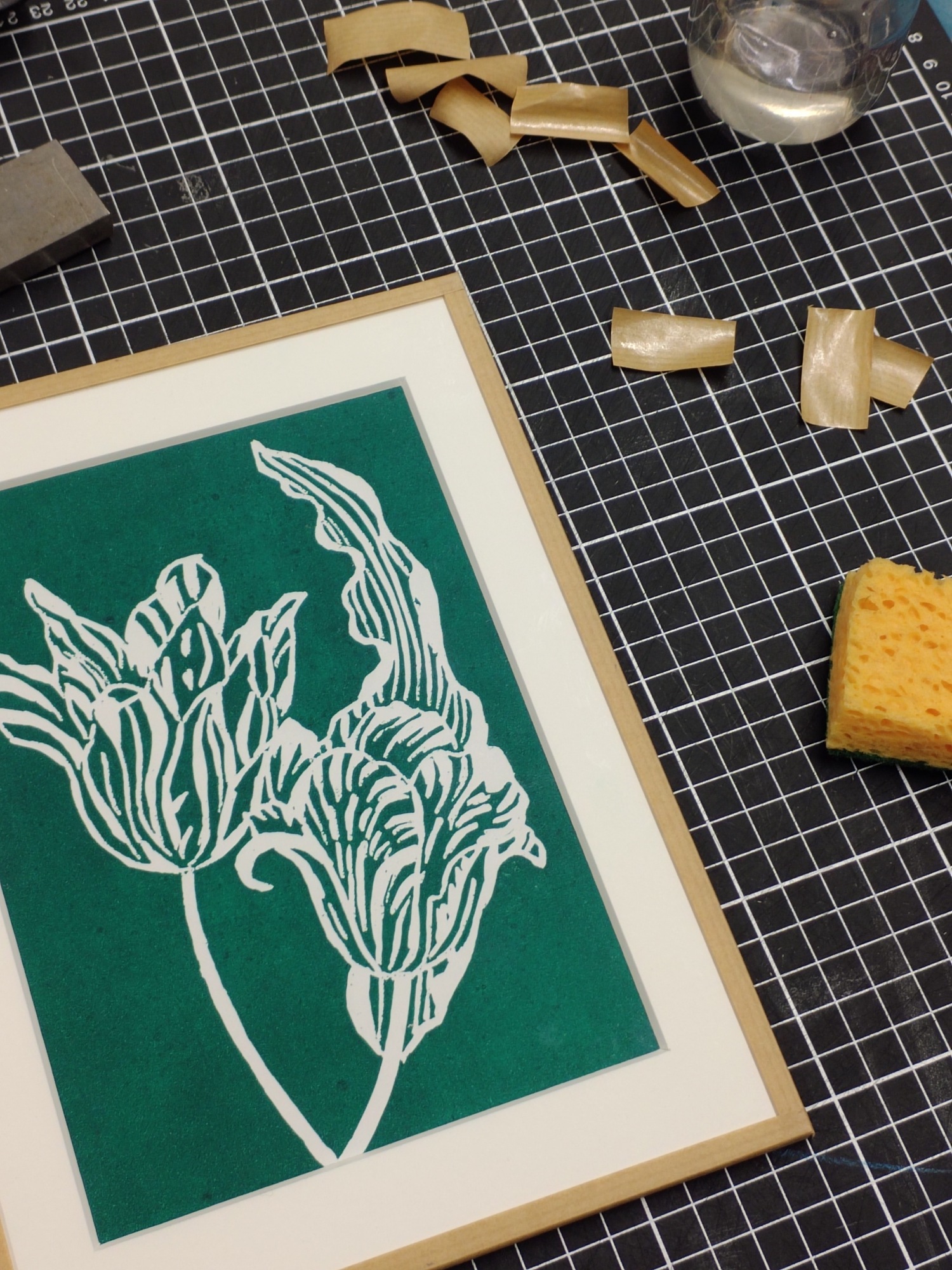
I chose two tulips inspired by Jean-Baptiste Ganne’s graphite drawings from his Windhandel series (Amsterdam 1637 / Athens 2008), which draws parallels between the first tulip bulb speculative crisis in the 17th century and contemporary crises.
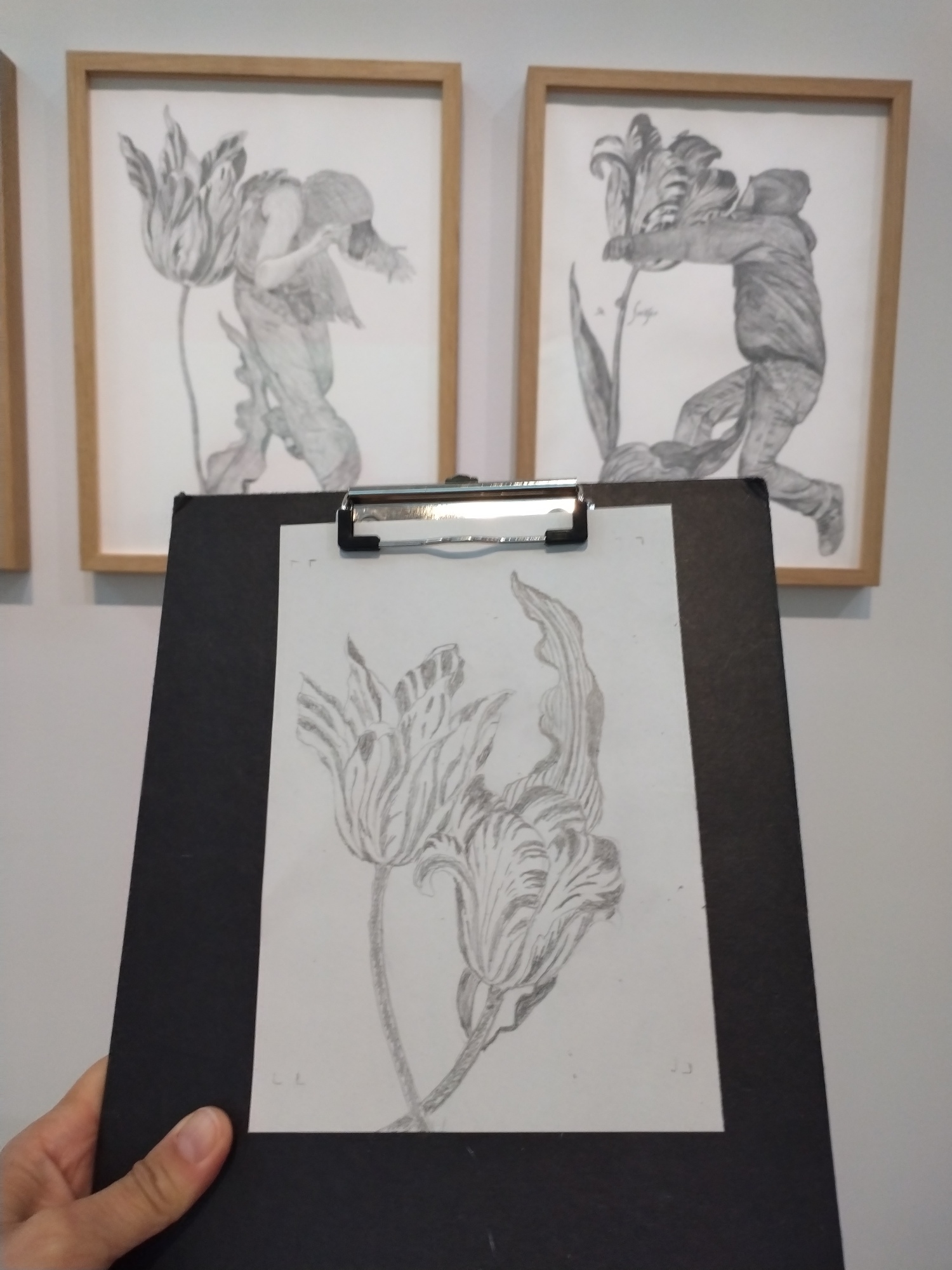
This series particularly moved me. The artist juxtaposes 17th-century Dutch prints depicting tulips with photographs of the 2008 Athens student riots. Through this unexpected pairing, he draws a parallel between the famous “tulip mania” of 1637—often considered one of the first speculative bubbles in history—and contemporary crises. A powerful work, where flowers and human figures intertwine to question the economic, political, and social mechanisms of our societies.
Printmaking in the graphic arts workshop
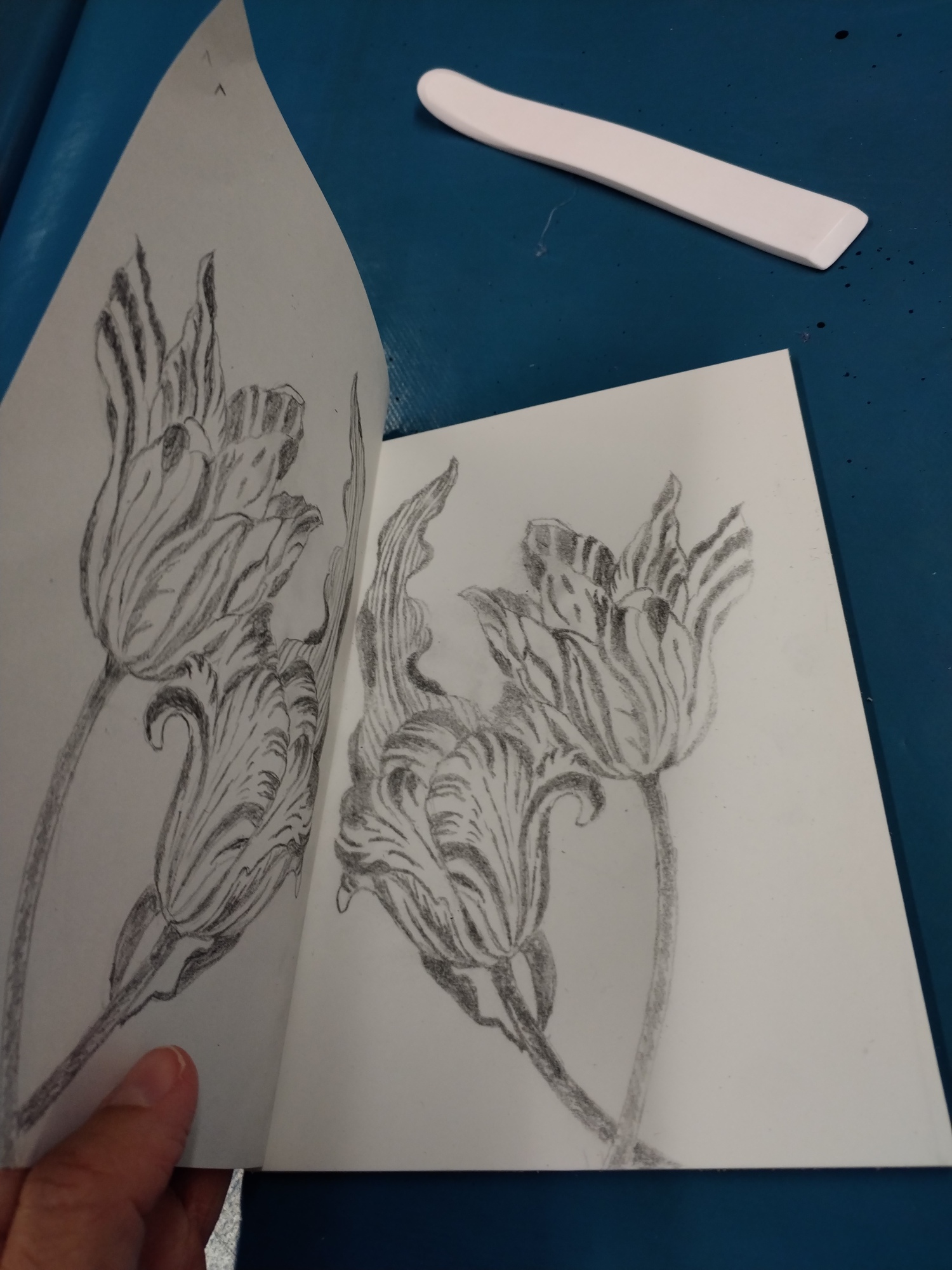
The afternoon was devoted to linocut printing on rubber blocks, after transferring my drawing in grease pencil (4B).
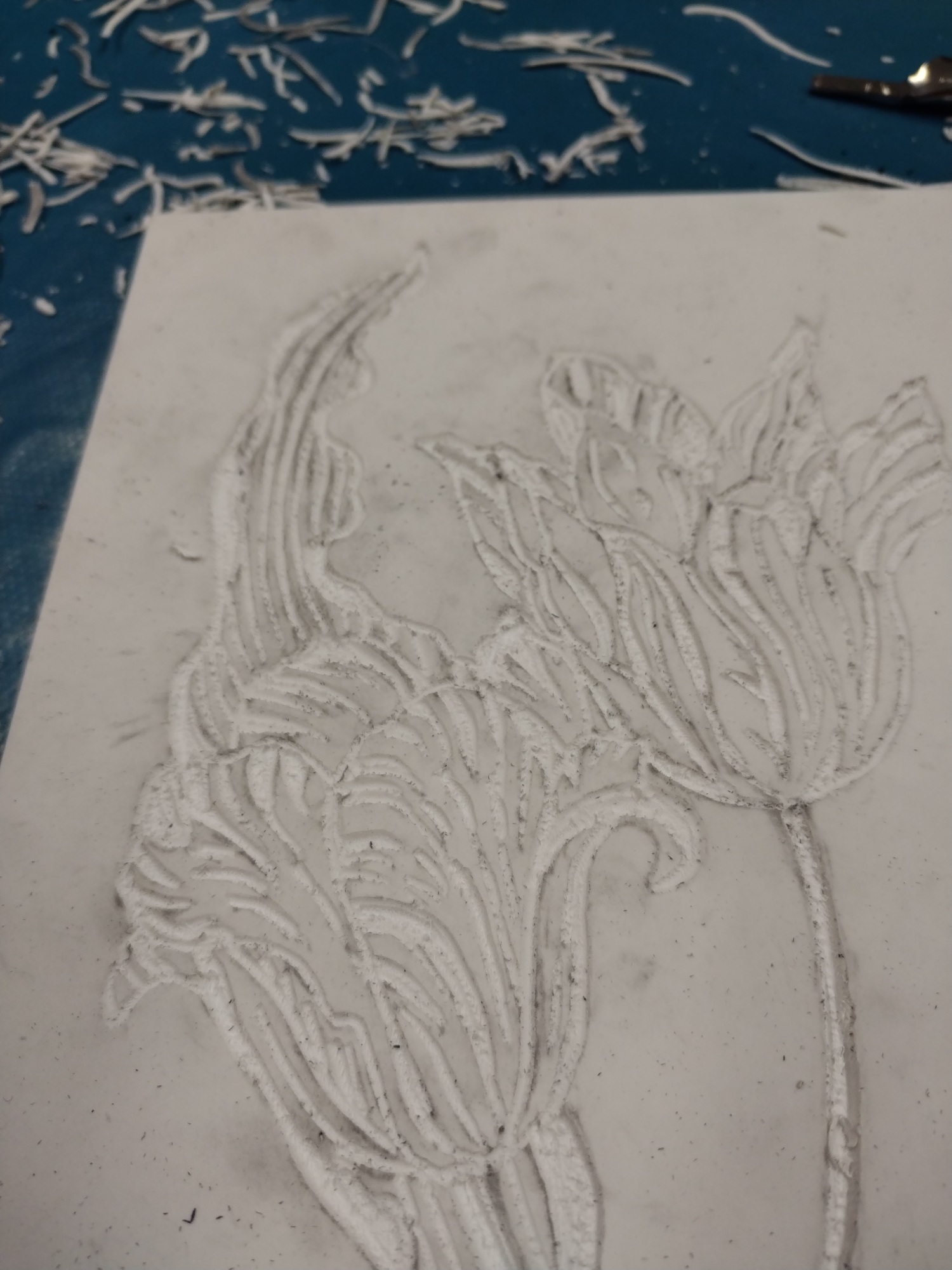
Next comes my favorite step: engraving. Using gouges of different sizes, I carved into the material, taking care to preserve the delicate lines of the tulips. Every stroke counts, because what is removed cannot be corrected.
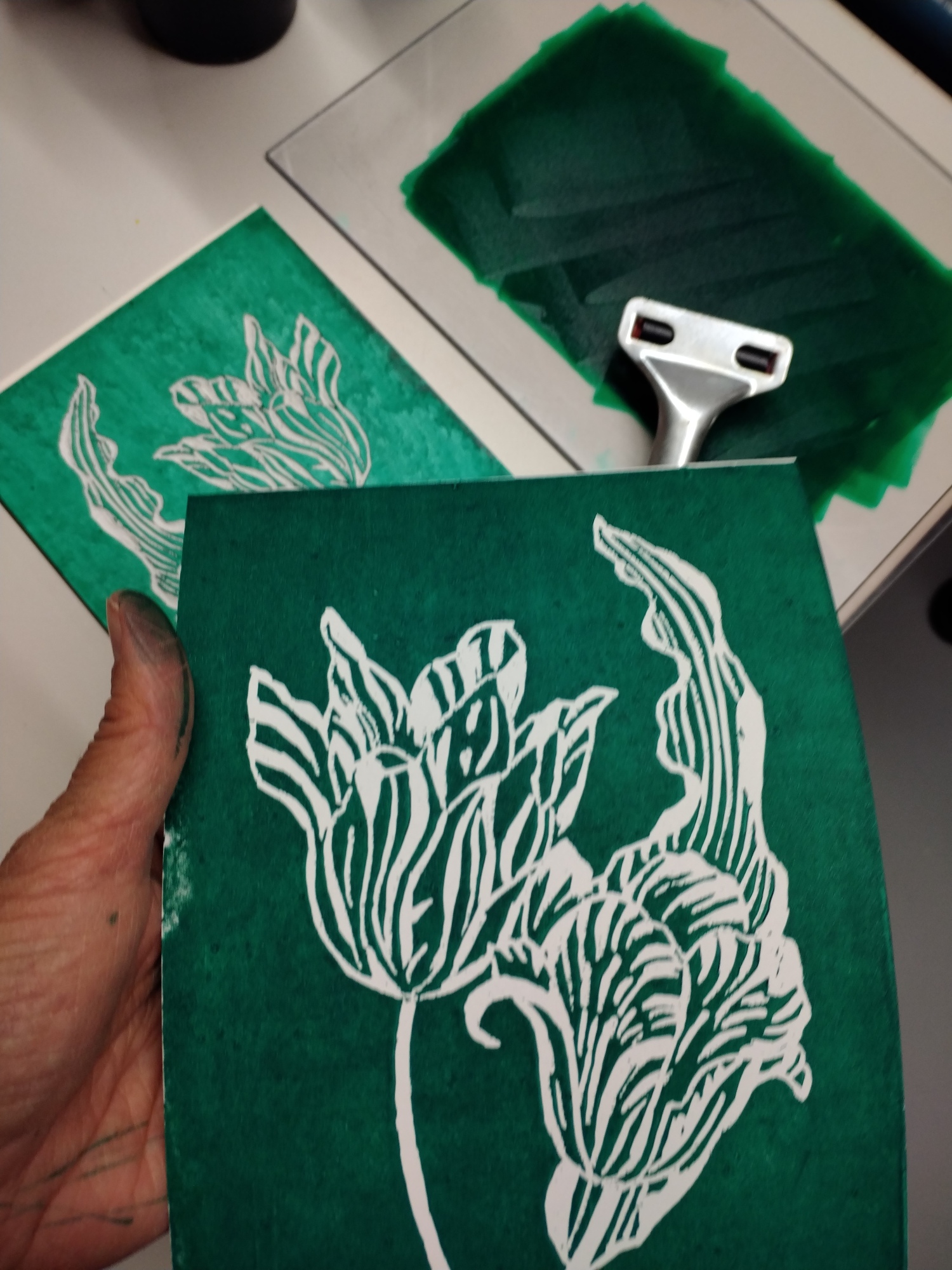
Once the plate was ready, we proceeded with the printing using linocut inks on smooth paper. I made several tests: some in green, others with gradient effects. It’s always a magical moment to discover the result of the first print, a blend of technical mastery and a touch of the unexpected.
Museum-style framing
On Sunday, we explored framing techniques used for the preservation of works on paper: assembling the mat, Japanese paper hinges, gummed kraft paper, and mounting under glass.
This workshop would not have been as enriching without the guidance of Salomé, curator of the graphic arts department, and Corinne, public outreach coordinator at the Nantes Museum of Fine Arts. Their expertise and generosity allowed us to better understand not only the artistic techniques, but also all the conservation, mounting, and installation work carried out behind the scenes.