Category Archives: Non classé

Printmaking with Elsa at La Bonneterie

I’d been keen to try my hand at engraving for a long time, even though it did intimidate me a bit… This traditional printing technique involves engraving a design into a metal plate. The ink then settles into the incisions before being transferred onto the paper using an intaglio press.

What are the steps?

1. Preparing the plate

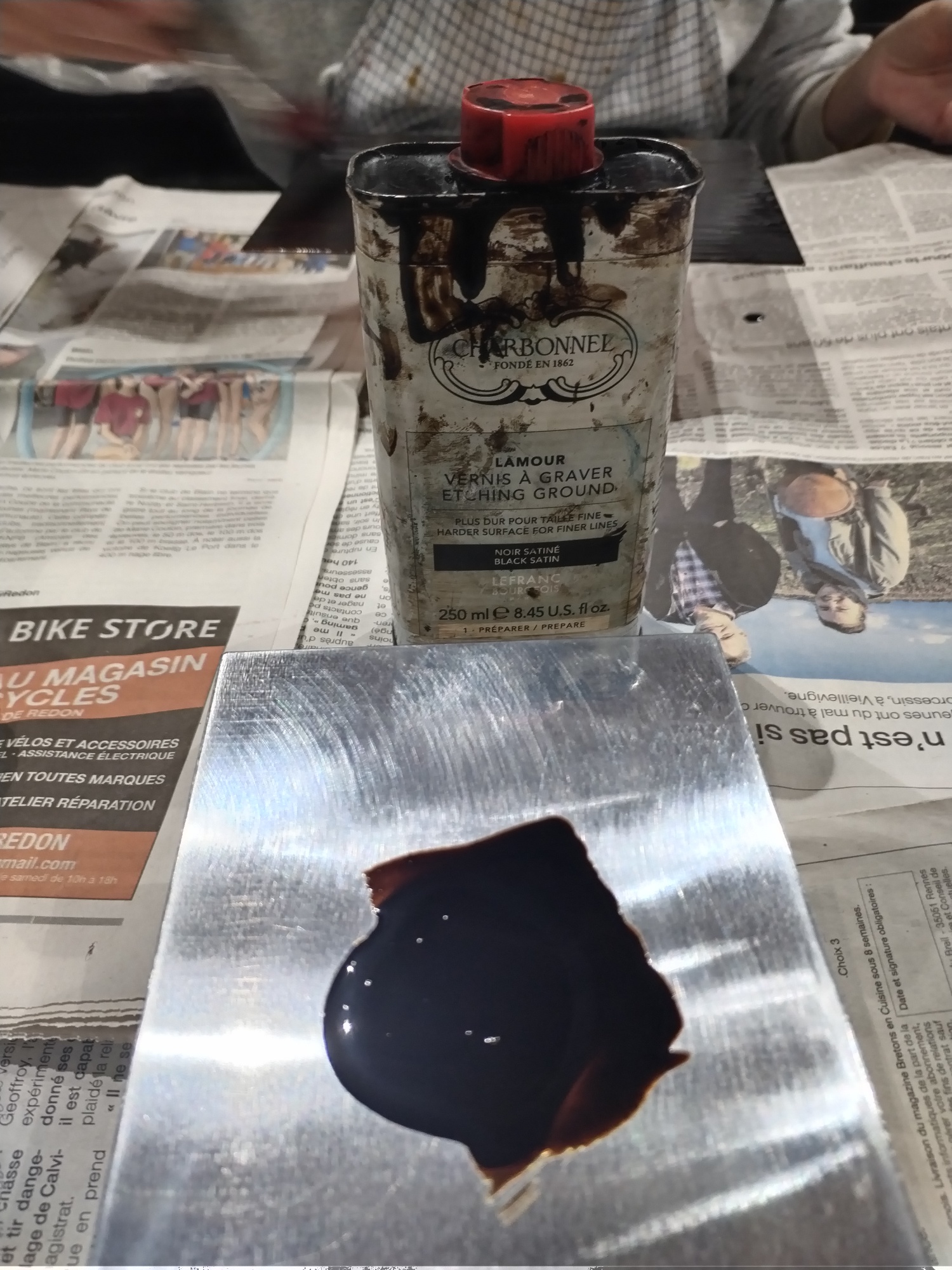
The zinc plate is first thoroughly degreased with Meudon white, then cleaned with cider vinegar, water and coarse salt. After rinsing, it is left to dry without touching the surface with your fingers. A thin layer of satin-finish black varnish is applied to the entire plate. After drying on a hotplate, it is cooled on a cold surface to set the varnish.
2. Transferring the design

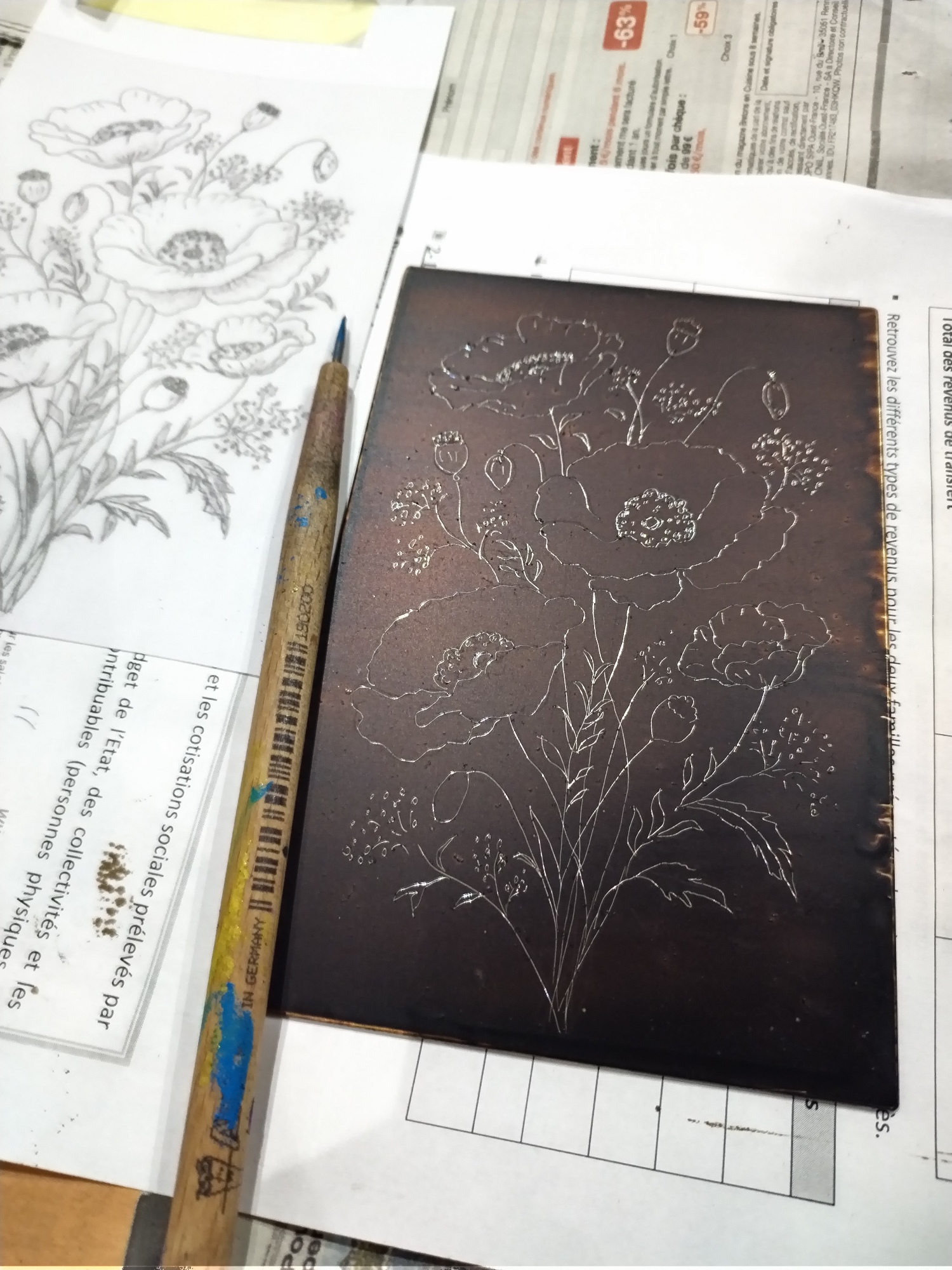
A black-and-white photocopy of the design, cut to the size of the plate, is secured at the top with adhesive tape. Using a mechanical pencil, the outlines are traced to transfer the design onto the varnish. The sheet is removed. The design is then traced with a drypoint needle, following the lines to expose the metal and prepare the engraving.
3. Etching

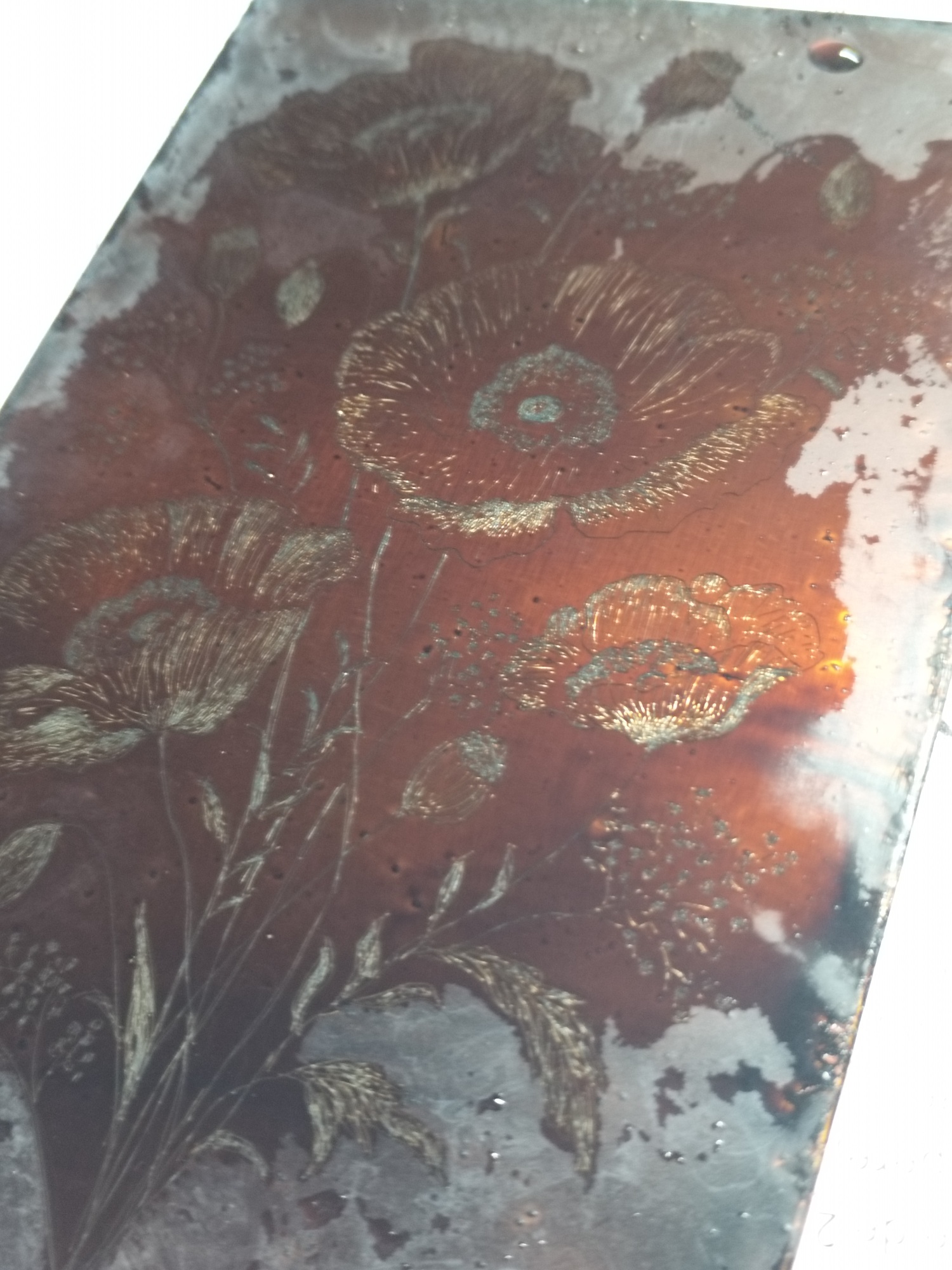
The plate is immersed in a bath of copper sulphate suitable for zinc. This stage, known as etching, serves to etch away the exposed areas and fix the design in the metal. The plate is then rinsed. The plate is heated on a griddle to facilitate the removal of the varnish. A cloth soaked in vegetable oil is used to clean the surface and reveal the engraved design.
4. Printing the print

Oil-based ink is applied to the plate, then carefully worked in with tarlatan, a fine cloth used to remove excess ink from the surface whilst retaining the ink in the recesses. The special paper, which has been soaked for around two hours and then dried, is placed on the inked plate. The whole assembly is passed through the intaglio press. Under the pressure of the rollers, the paper picks up the ink contained in the incisions, revealing the design. The prints are left to dry flat for about two weeks, after which they can be enhanced with a few touches of watercolour…
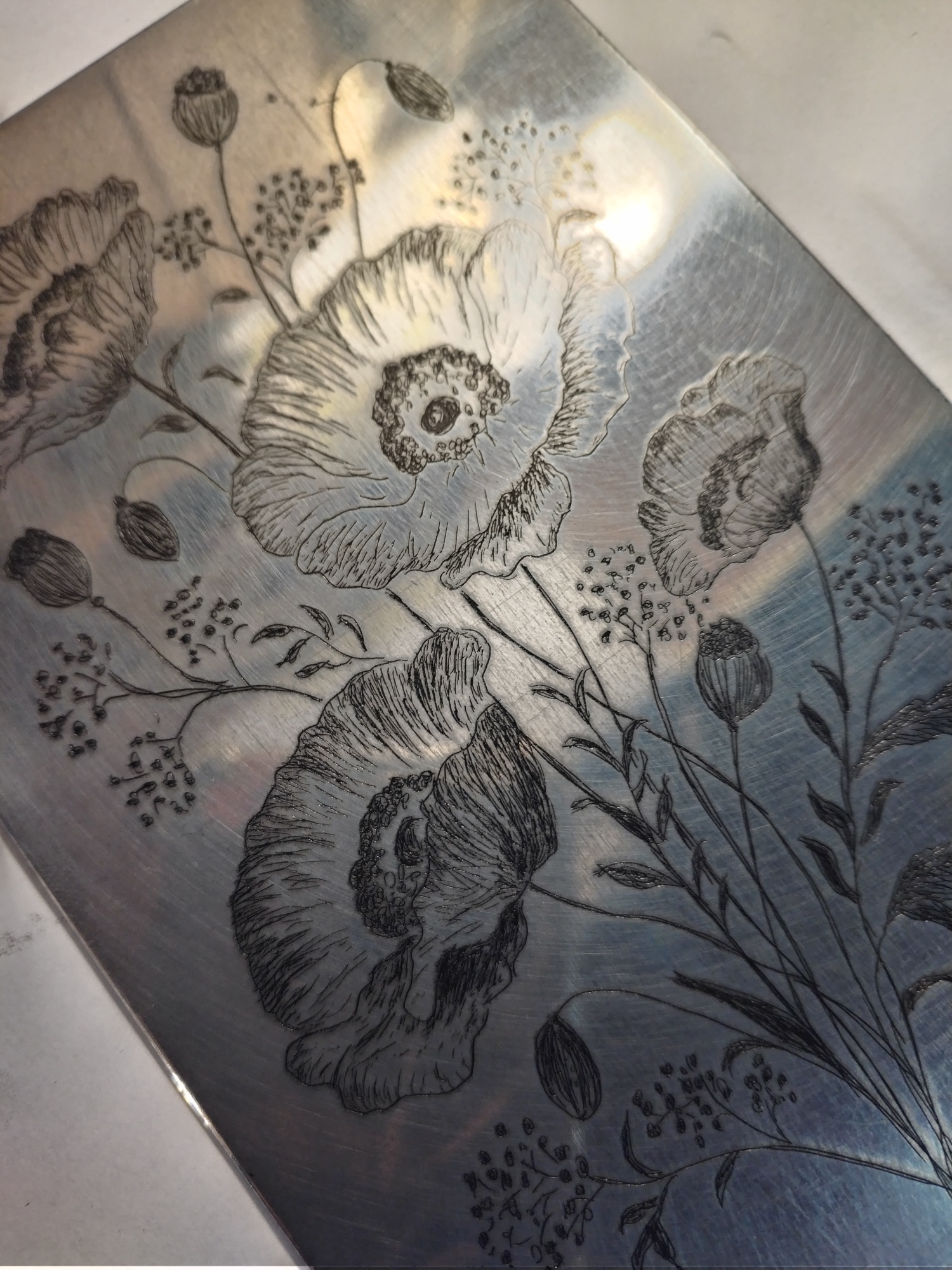
The result: an original print

At the end of the workshop, I left with two original prints on thick paper and my engraved plate for any future prints… I loved how the line flowed on the varnish. Contrary to what I’d thought, this engraving process is very smooth, quiet and effortless. A wonderful discovery – thank you, Elsa!
Inspiration

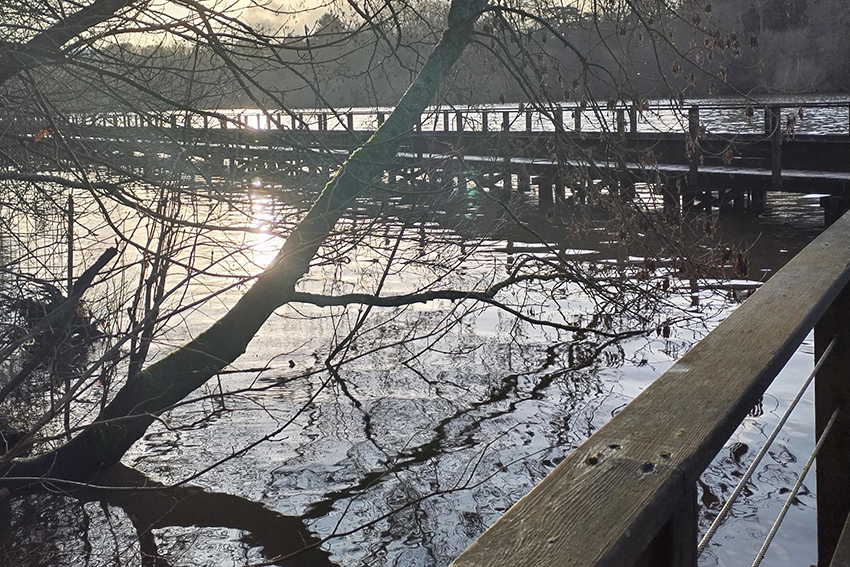
Inspiration is the breathing step in which air fills the lungs.
It’s also an inner movement that leads to doing and acting.
This enthusiasm, creative breath, animates the writer, the artist, the researcher…
Other are often its source. Inspiration elevates and brings us back to basics.

Axelle Design inspiration

Screen Printing Without Exposure

1. Painting on the Mesh

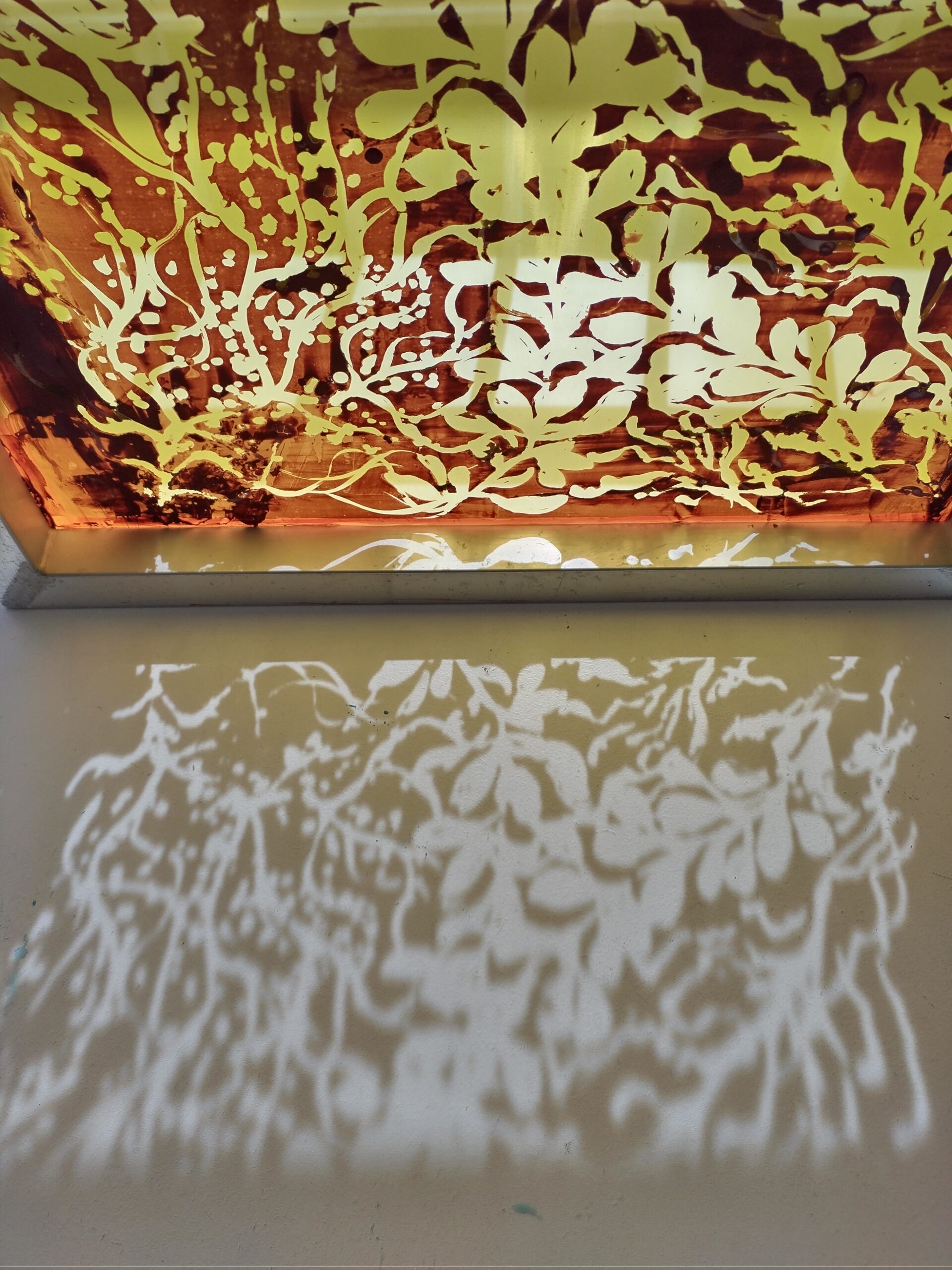
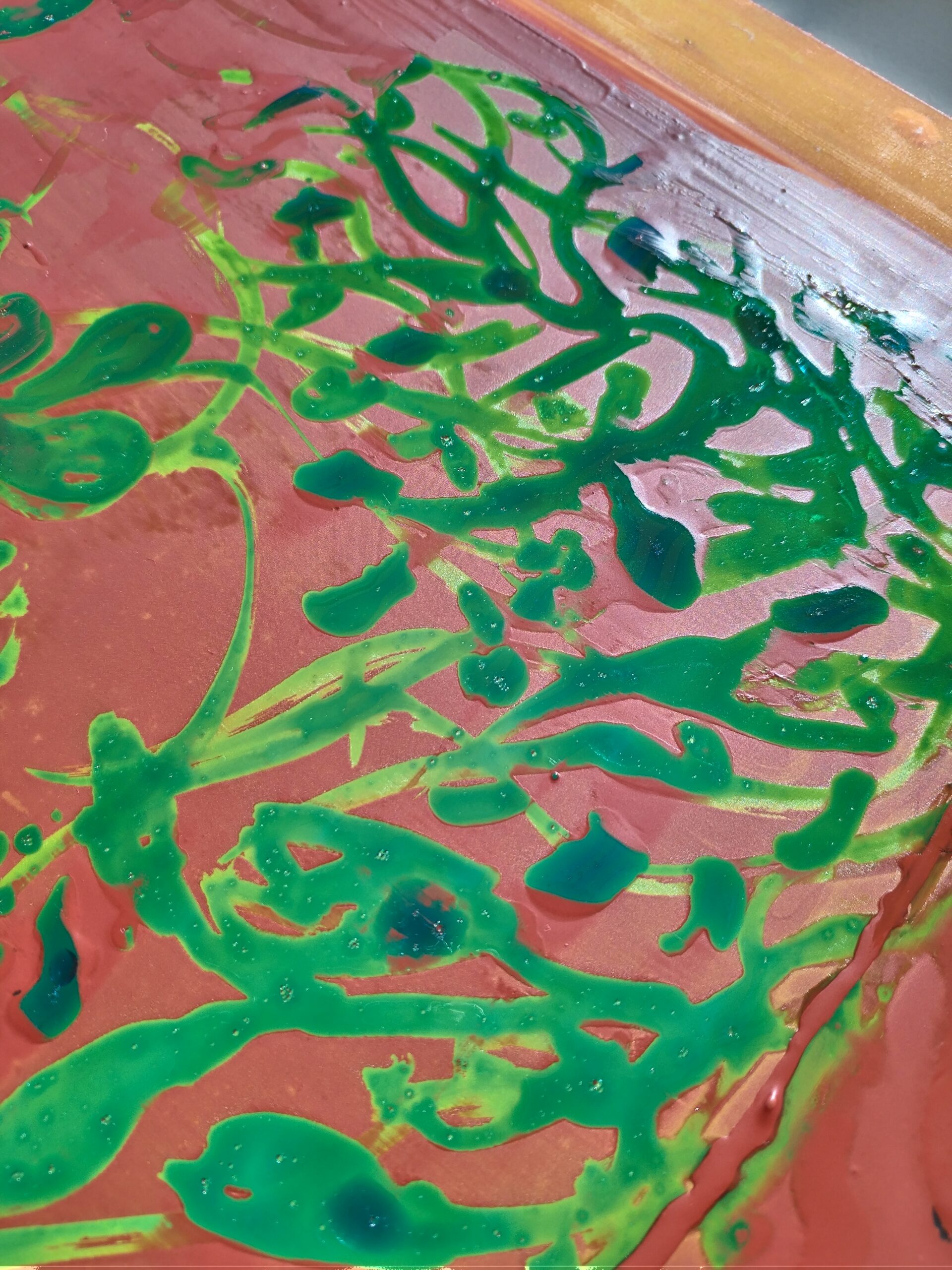
It all starts with the drawing! Using fine or broader brushes, I apply the drawing fluid directly to the mesh to create my design. Once the drawing is complete, I let it dry thoroughly.
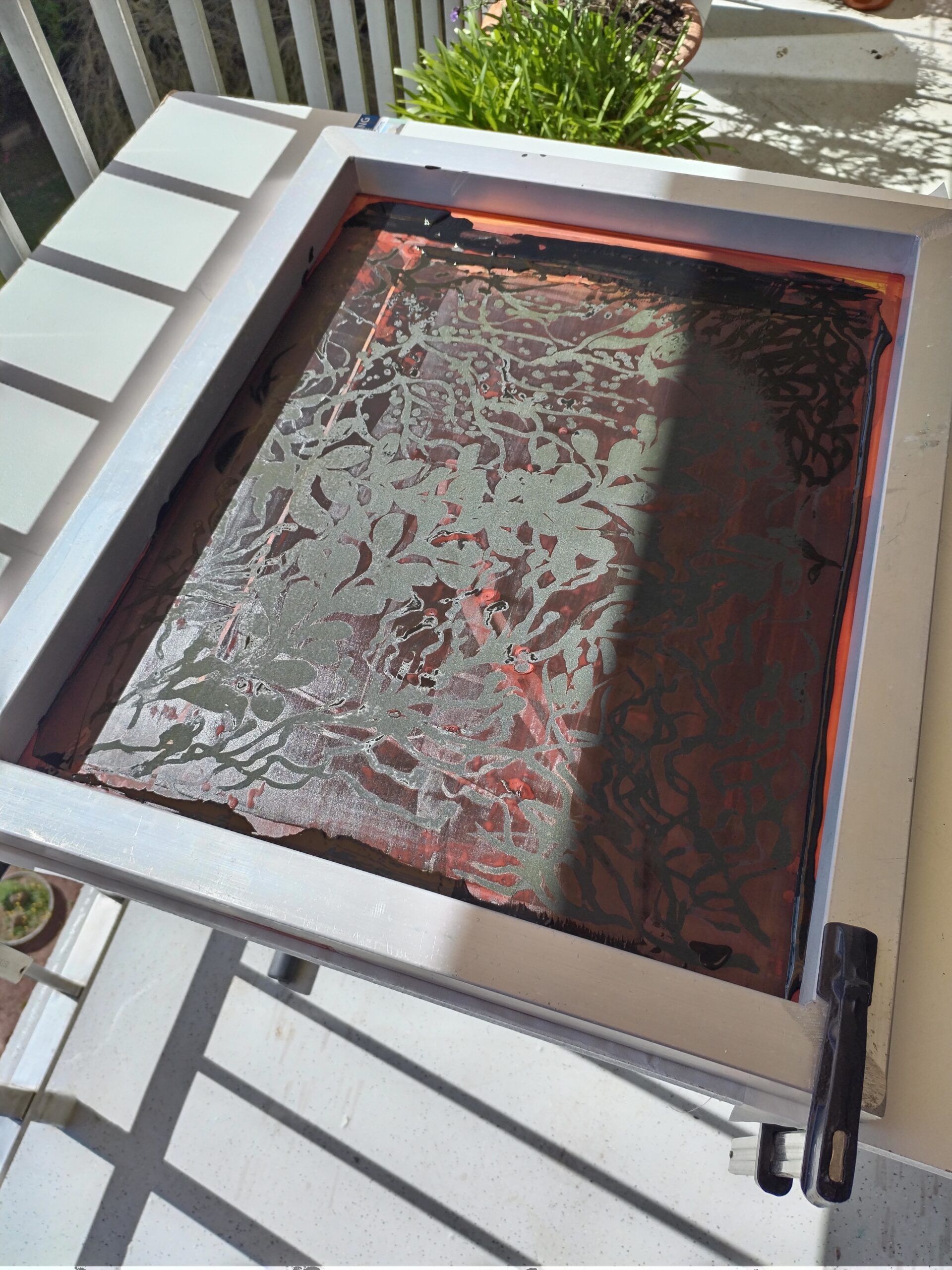
Next, I apply the screen filler using a squeegee to block out the areas around the design. Once dry, the screen is ready for the next step.

2. Revealing the Design

Time to rinse! The water dissolves the drawing fluid, opening up the areas where the design was drawn, while the screen filler remains in place across the rest of the mesh. After one final drying session, the screen is ready to print, without the need for any exposure.

3. Printing Time

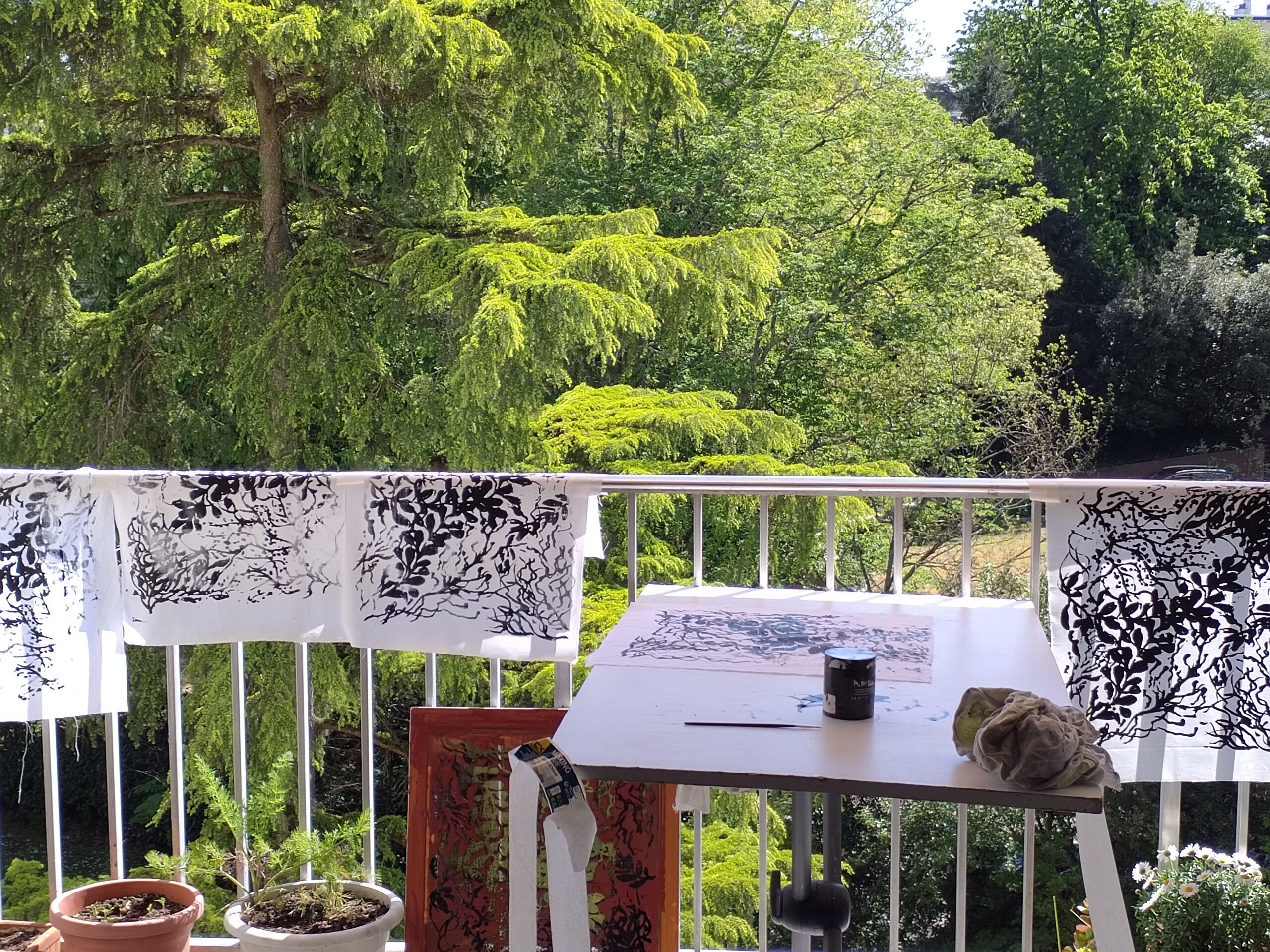
I place a little ink on the screen, then pull it across the mesh with a squeegee, applying even pressure. All that’s left is to lift the frame and reveal the result! The first prints help me fine-tune my technique, adjust the amount of ink, and experiment with different papers and colours.

Experiment, Observe, Repeat

Screen printing requires a little patience and a few attempts, but that’s also what makes it so interesting: every print holds a little surprise. It’s a lovely way to explore drawing through a different medium and let creativity breathe some fresh air!

P.S. I bought my frame secondhand on Leboncoin and used these products (this post is not sponsored): Drawing Fluid and Screen Filler.

When tulipe tell the story of the world

During the ‘Plants and People’ exhibition at the Nantes Museum of Art, I had the chance to explore new techniques in a ‘three-in-one’ workshop.

Drawing at the Nantes Museum of Fine Arts

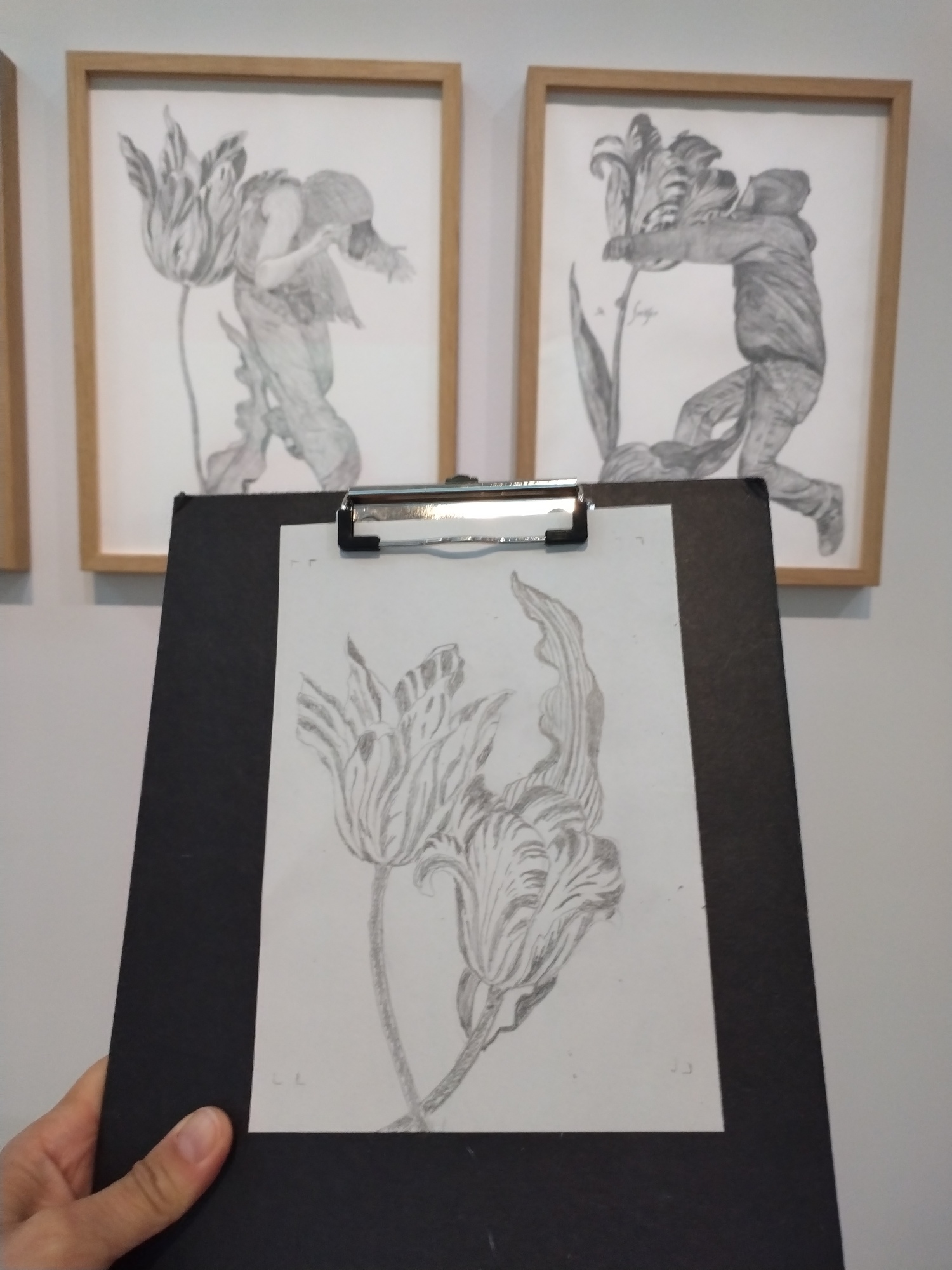
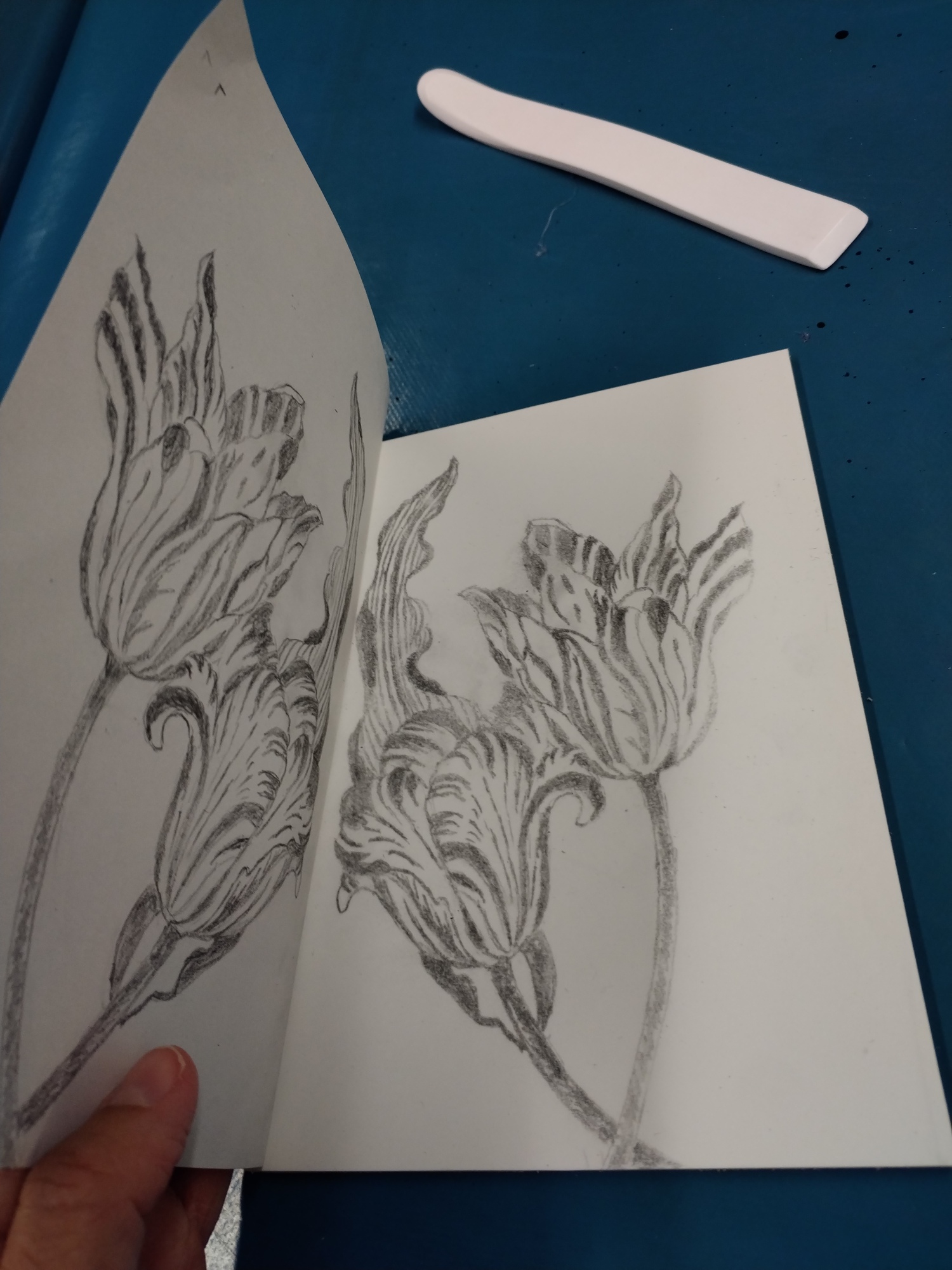
In the morning, we began by drawing directly in front of the artworks.
I chose two tulips inspired by Jean-Baptiste Ganne’s graphite drawings from his Windhandel series (Amsterdam 1637 / Athens 2008), which draws parallels between the first tulip bulb speculative crisis in the 17th century and contemporary crises.

This series particularly moved me. The artist juxtaposes 17th-century Dutch prints depicting tulips with photographs of the 2008 Athens student riots. Through this unexpected pairing, he draws a parallel between the famous “tulip mania” of 1637—often considered one of the first speculative bubbles in history—and contemporary crises. A powerful work, where flowers and human figures intertwine to question the economic, political, and social mechanisms of our societies.

Printmaking in the graphic arts workshop

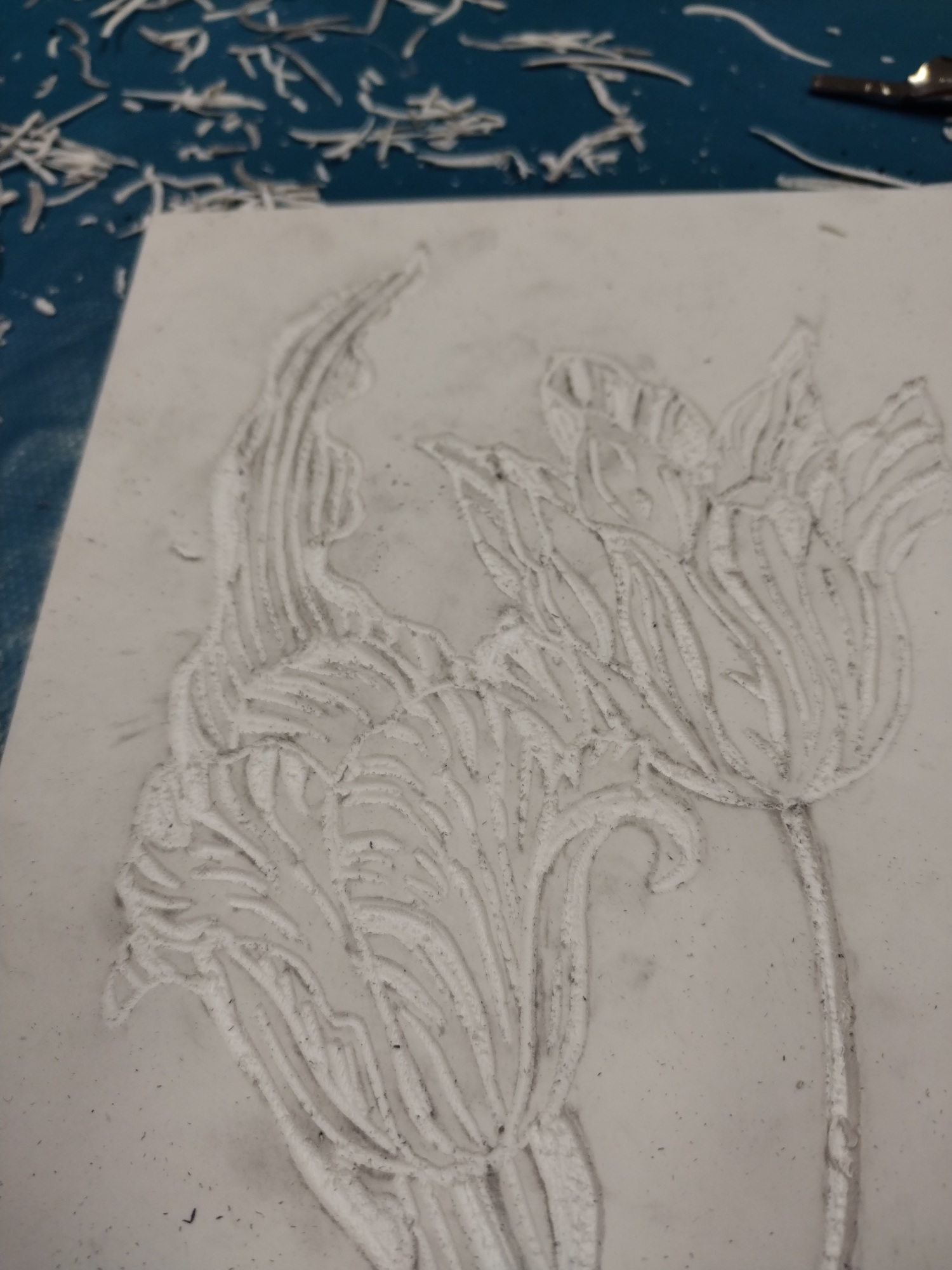
The afternoon was devoted to linocut printing on rubber blocks, after transferring my drawing in grease pencil (4B).

Next comes my favorite step: engraving. Using gouges of different sizes, I carved into the material, taking care to preserve the delicate lines of the tulips. Every stroke counts, because what is removed cannot be corrected.

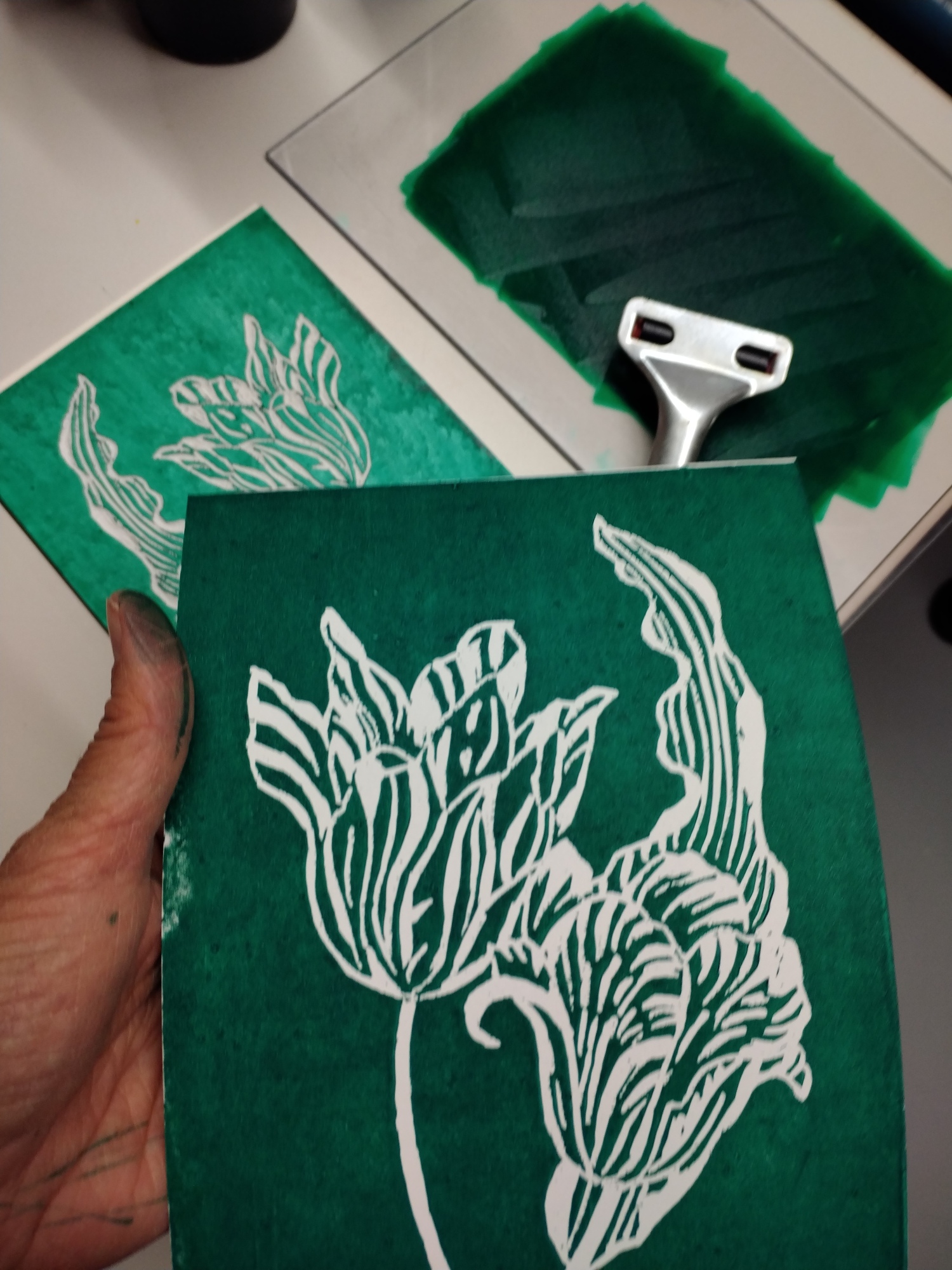
Once the plate was ready, we proceeded with the printing using linocut inks on smooth paper. I made several tests: some in green, others with gradient effects. It’s always a magical moment to discover the result of the first print, a blend of technical mastery and a touch of the unexpected.

Museum-style framing

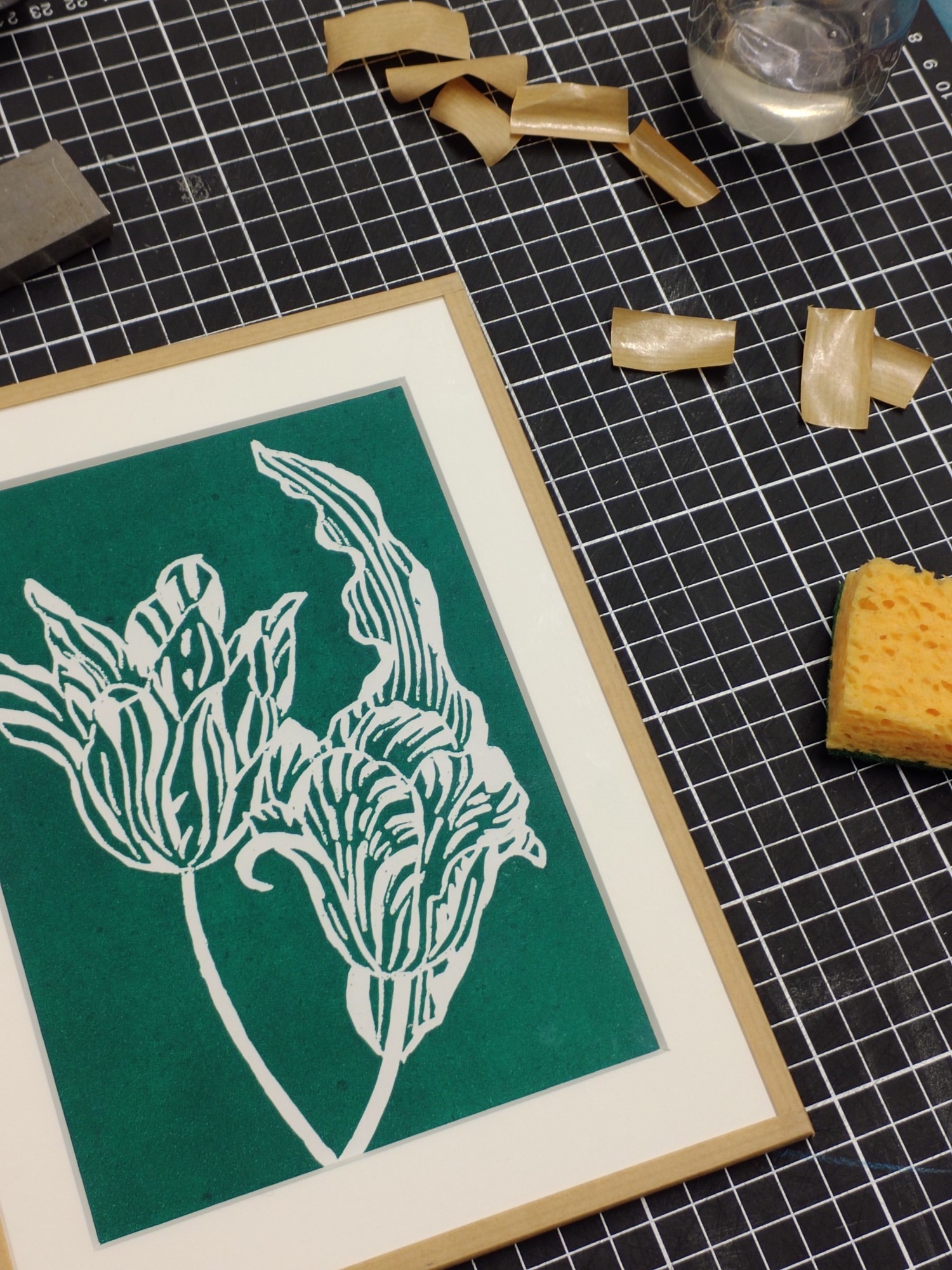
On Sunday, we explored framing techniques used for the preservation of works on paper: assembling the mat, Japanese paper hinges, gummed kraft paper, and mounting under glass.

This workshop would not have been as enriching without the guidance of Salomé, curator of the graphic arts department, and Corinne, public outreach coordinator at the Nantes Museum of Fine Arts. Their expertise and generosity allowed us to better understand not only the artistic techniques, but also all the conservation, mounting, and installation work carried out behind the scenes.

France Design Week

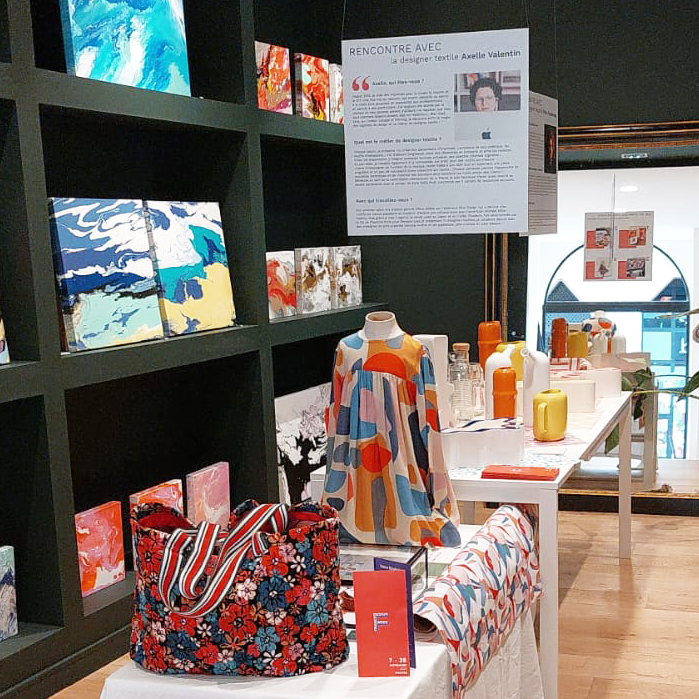
From 7 to 28 September, France Design Week returns to #Nantes to showcase and celebrate #design across the region…
Thank you, Maxime, for inviting me to this third edition of #FDWNANTES in Nantes!
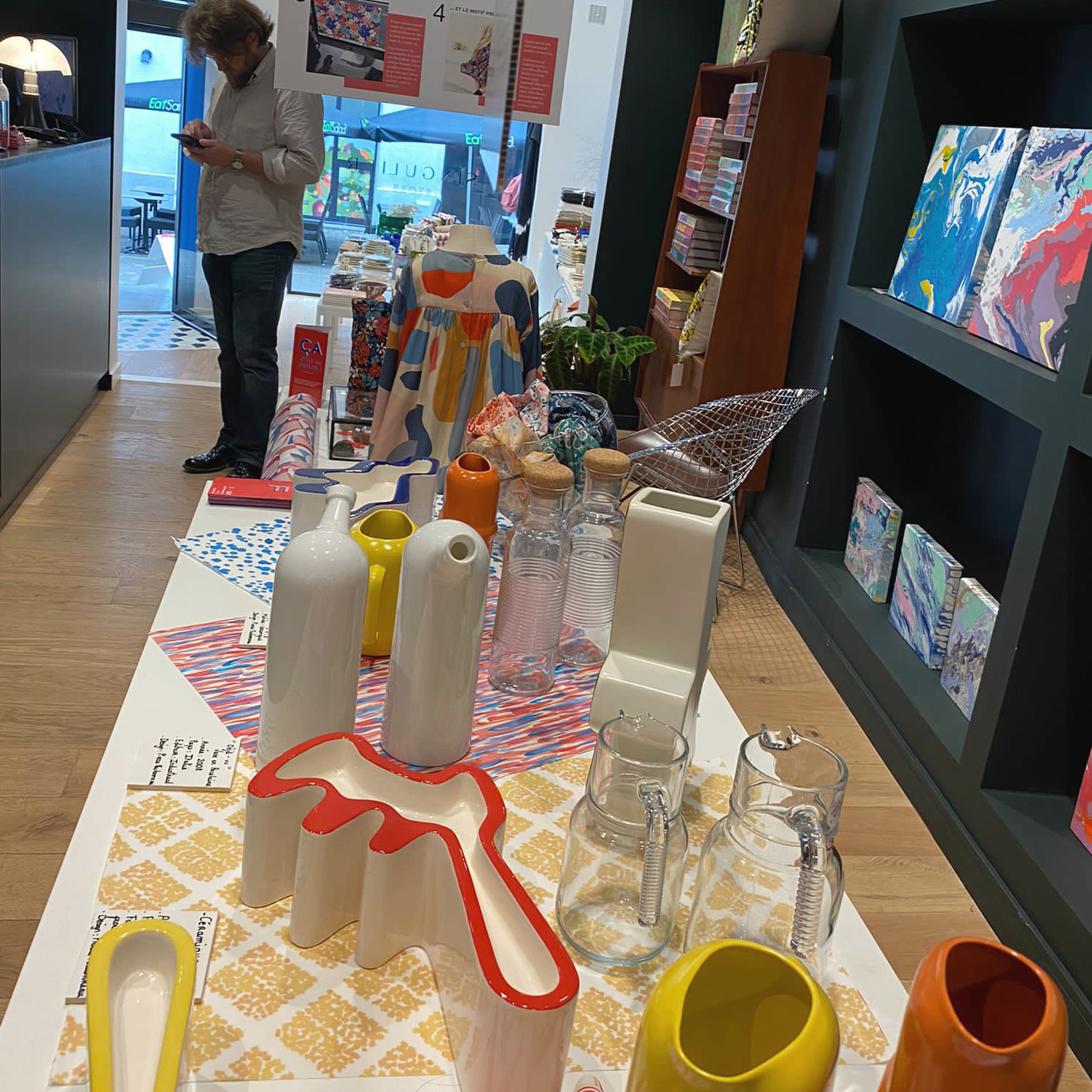
In turn, I’m delighted to invite you to discover this dream installation, conceived, printed, laid out and cut out this summer… and just hung up with Albane & Pierre. We wanted it to be both educational and fun.
See you at Singulier store, 28 Rue Scribe in Nantes, just a stone’s throw from Place Graslin!

Take a look behind the scenes at the designs created for the lovely Basque brand ‘Arsène & les pipelettes’ for the AW2324 collection!

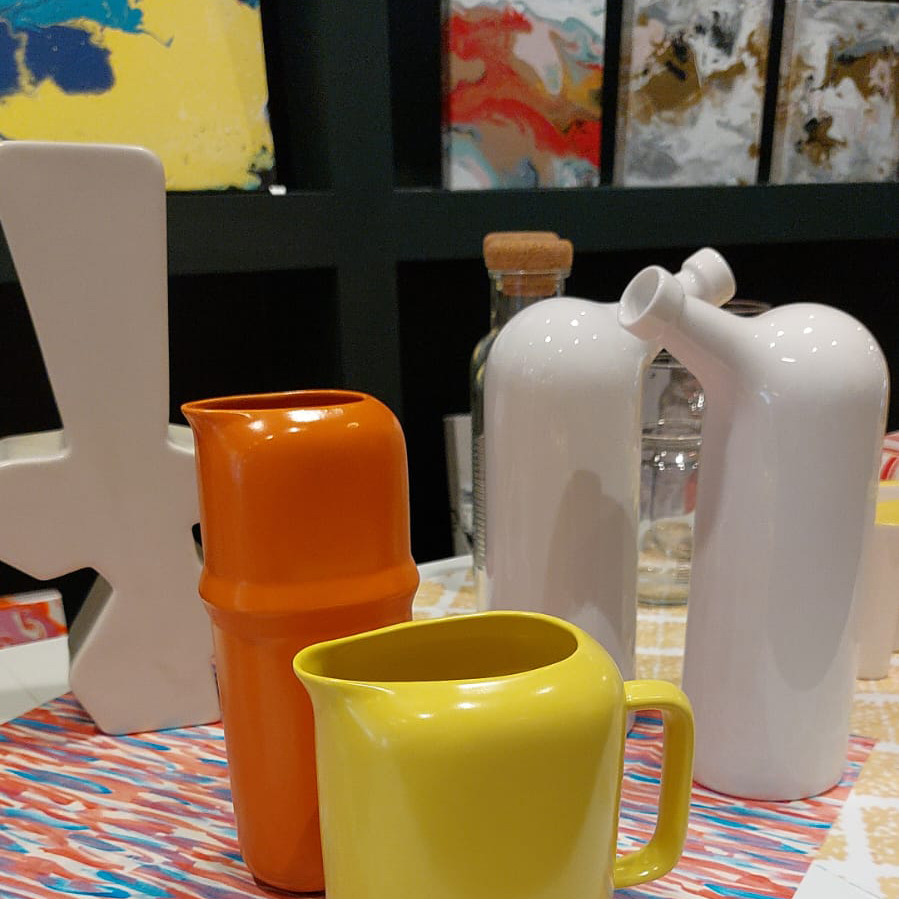
Pierre Foulonneau will also explain how he designed and created these unique ceramics, which were cast in Italy…

Albane, the museum guide, will show you round our museum of everyday objects…

… a vibrant and light-hearted interplay between industrial design, textile design and artists’ canvases!

France design week Axelle Design Pierre Foulonneau

See the full itinerary for #FDWNANTES.

Grain d’aile

On this Mother’s Day, I wanted to share with you these few pictures of Grain d’aile, my favourite book, which my mum gave me when I was five…

Naturally, I chose this one to present to the reading club in Year 1.
It was so beautiful and must have been a big hit… so much so that it was eventually ‘borrowed’ and never returned.
I still remember how sad I felt at the time, as the book was no longer in print in this illustrated version… It was only more than 30 years later that I finally found this book again – second-hand in the same edition, the 1977 one – and wept with joy!

So here are a few extracts from this magnificent tale written by Paul Eluard for Jacqueline Duhême, who illustrated it…